-
Last Wednesday’s Night Dream (rough draft poem)
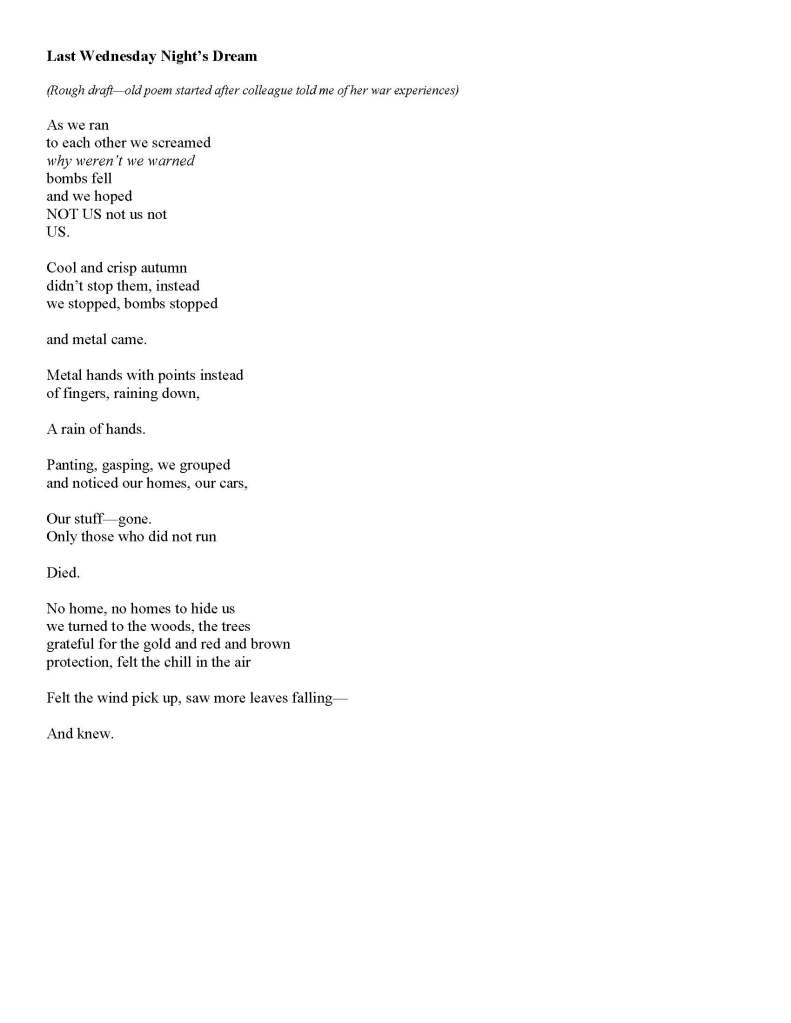
To M–who survived four years of an urban modern sniping war. I met her as a teaching colleague years later. PS It appears I have two blogs with similar names and “similar” but not the same URL’s:
I must determine which one has my archives, was paid for, etc.
Must choose or merge from:
https://lauraleewriterpoeteducator.com
OR
-
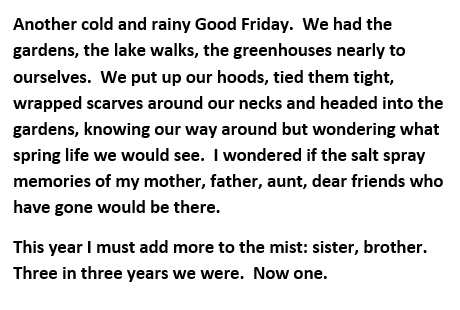
Good Friday in the Gardens – prose poem
PS It appears I have two blogs with similar names and “similar” but not the same URL’s:
I must determine which one has my archives, was paid for, etc.
Must choose or merge from:
https://lauraleewriterpoeteducator.com
OR
-
We can do Better–Students and Test Scores and Teachers
From a few years ago:
This week was tough–the students are edgy, chatty (to the nth degree), and I have found my normally limitless patience–limited. Hmmm… the older I get, the less I know.
Students seem to be falling apart this time of year. Stress is upon us as standardized testing looms. And all the while, our kids need us, the teacher, the mentor, the caring adult.
I can only pray–and could use others prayers as well–for enlightened compassionate administrators who understand this.
Kids are more than test scores.
Teachers are being judged by kids test scores.
This pits teachers against kids.
Only those who don’t need a paycheck can ignore this fact.
This fact is heart breaking.
******************************
Why?
Every teacher I respect went into teaching to serve society or help kids. A few went into teacher since they loved their subject area, then grew to love the kids.
I have not respected a teacher who loved content, but not kids. I cannot relate to that type of person.
We who chose to work with at risk kids are at a dangerous time in our careers; sometimes our kids can endanger our actual ability to support ourselves, to make a living.
A student fell apart a few weeks ago, on the date of an important (to the school) test. His scores plummeted 8 grade levels.
Did they really? No, they did not. This young man was gone for weeks after this, due to the major life problems he was dealing with.
How does this translate?
Bad teacher?
Click. Kid vs. teacher.
This same student has the respect to wake up, try the test, but it just wasn’t in him that day.
I defy anyone, any adult with all sorts of success in life, to deal with homelessness and major legal issues and do well on a standardized test that day. We, with our educations and coping skills would feel the strain.
I had an enlightened and compassionate evaluator this year, and for that I am very grateful. He was in the room another time a student had a crisis, and understood what was going on.
Click.
I cannot count on always being so lucky.
Click.
Legislation pending to tie teacher ratings with student test scores.
Click.
Good teachers can become bad teachers. Or, “bad” teachers.
Click.
I must learn to live with this, or I will become a jaded, cynical, bitter teacher, and that is not a good teacher.
I’ve already changed and feel the stress greatly.
I do think about kids test scores and scream inside sometimes.
****************************
I remember a time and place where we teachers were trusted, valued, thanked. We worked a tough job, but we knew we had the support of the administration and the community. We felt that we could go on, even though the kids lives were so hard, and try to help them the best we could.
Then came the change, IT, the relentless and cruel push to test and punish, test and punish.
And now kids become test scores?
**************************************************
Of course not. I had to discipline a student this week who is truly dealing with life changing issues, and could barely sleep. I had sent him to the Deans office, and felt cruel and worried about him. It had to be done, for the rest of the class had to continue, but still…he’s a kid. A kid who had another adult be mean to him.
Click.
***************************************************************
The moments of joy and grace get fewer as the pressure increases on everyone. I see it in the faces of administration.
And yet I see glimpses of their caring as well as their exhaustion. They have a job to do. They are not the enemy. I see them in the halls helping kids. I read their memos thanking us for doing a good job in tough times. I know they try so hard to keep our school people focused, but they must also make a living and they are on the firing line due to test scores.
Click.
Admin vs. teachers?
******************************************
And yet, the public deserves our very best and our children should be demanding the best from us. The best would be hard work to provide a quality education for each child.
How to translate that into a test score is the awful issue: it cannot be done.
*************************************
As a reading specialist, I will spend much of the rest of the year testing, analyzing data, and writing reports, on top of teaching my classes.
So testing is big in my mind right now.
I feel angry that I cannot focus all my attention on the best lessons I can create, on making all the calls home to parents, on writing longer notes on the kids work. So much else to do prevents this.
Although I try at times.
Click.
There are not enough hours in the day but I try to create more by not living a life during the school year sometimes.
Click.
6:30 am at school. 10:30 pm still at school.
Click.
I wanted to cry, to rush to a window, to smell the air, read a book, something.
Sick the next day.
Click.
My body is human. Just because I have a tremendous drive to do it all well does not mean I can ignore the need for sleep or relaxation.
The other day, my doctor took out notes and read word for word how long I’ve been telling her that long hours of work are affecting my sleep, my mood, my energy.
I feel I have been crabby for over a year now, at the best place I’ve worked. At a wonderful place with so many support systems in line and I wonder:
How are my colleagues at less fortunate schools coping?
Click.
Don’t judge others until you’ve been there. I used to do that–judge other teachers harshly who left when the going got tough.
I never, ever, ever thought I could feel so annoyed that I cannot just teach.
Just teach? That alone is a never ending job.
All this testing? I understand the need for accountability, but some of it makes no sense–is mathematically impossible for all children to be above average or average in scores.
We know that. Everyone knows that. Yet we have to jump through hoops trying to get all kids average or above in narrow tests that don’t look at the whole child.
Child as test score?
Click.
The whole child. The child is not a thing.
The day I forget that must be the day I leave.
*********************
For now, I am so grateful to my caring administrators and evaluators who encourage me to keep on helping kids, trying to mentor them, encourage them.
For now, I can pay the bills and then some, so I am very lucky indeed.
I fear for the day when a boy who is in crisis takes a test and those scores cost me my job. I fear that might be the day I fight to teach “higher” kids. I fear that might be the day when no one will want to teach our at risk kids, except for those who don’t need a paycheck.
*********************************************************************
For now, I am lucky and grateful.
And seriously crabby and annoyed too often.
Click.
Get it together. Toughen up. Teach them well. Do your best. Be yourself–you are no good at being another person.
I live for and by my values towards others. I could not be a dispassionate teacher. I tell bad jokes, make weird faces, have earnest talks with kids who are tired, worried, bored.
And hopeful. Where do they get the hope? I see resilience and joy in many of my students, even the most challenging ones (at times).
I am not the naive new teacher.
I am the rebellious but realistic teacher who knows we can and should do better and limit the relentless testing before it harms a nation of kids, before it limits creativity and compassion.
I am the relentlessly hard working teacher who creates very time consuming lesson plans to try to teach the kids the best I can. I am not the type of person who needs to be checked up on, for I do it as part of who I am.
I don’t know if I can work any harder.
***************************************************
But for now, it is what is is. I am lucky and grateful, but guarded, knowing things could change quickly. The climate is tense in education in many ways right now. Tense for the teachers, administrators, and the kids.
We can do better.Thanks for reading.
Laura

(image from the creative commons) PS It appears I have two blogs with similar names and “similar” but not the same URL’s:
I must determine which one has my archives, was paid for, etc.
Must choose or merge from:
https://lauraleewriterpoeteducator.com
OR
-
Little Red Car and Grief
From a few years ago:
And we sold the Big Guy’s car… not a big deal since it needed much more work than it was worth. The dealer bought it and knew, said they could fix much cheaper than we could…and it’s gone; no more worries it will burst into flames. Yes, we told the dealer we were worried about that gas smell, etc.
But it’s the car we bought right after my mom died. I remember so clearly how very cold it was when we bought the car…how can a car trigger this memory? I remember it was the six months of sunglasses and compartmentalizing grief: teach, smile, laugh…. head out with sunglasses and cry the entire way home. Stay in bed whenever possible. I hid this well. My colleagues told me they had no idea, since I was cheerful at work.
I remember sitting in a Chinese buffet feeling so strange that my mom would not see this new red car; she loved the color red. I remember feeling so cold,so very cold.
My mother is not a car, this is just a memory, and this car sale triggered the memory of that first six months of active grief and the compartmentalizing I was able to do. I remember the poetry that came out of that time about divorces, losses, etc. all ways to deal with loss without having to name it, the death of my much loved mother.
It is so strange to be without parents. Since then, we have lost my husband’s father. The death of friends has stopped now for a while. It was at the tale end of losing so many friends and loved ones, just a streak of bad luck.
I feel I am much out of that time, much better able to feel joy. It’s been a decade, and I can only wonder how people cope with tragic losses. I had much to help me such as a career and a loving spouse.
But to the red car gone now, the smoky one, you were a link to that time and now you are gone. I try not to hold onto things for sentimental reasons. I even tossed more than forty writing journals when we moved and know it’s time to purge and clean up the place to reclaim space.
It’s interesting how moments can trigger memories. So clearly. Sitting in that Chinese buffet with a new red car in the parking lot, wondering if I would ever feel warm again.
Thanks for reading.

(red car image from the creative commons) PS It appears I have two blogs with similar names and “similar” but not the same URL’s:
I must determine which one has my archives, was paid for, etc.
Must choose or merge from:
https://lauraleewriterpoeteducator.com
OR
-
Chorus Frogs in Marsh 4-5-22
Chorus Frogs in Marsh 4-5-22. Hope you can hear this! Enjoy. It’s always brings such a smile to my face. Such a sign of spring.
Laura
PS It appears I have two blogs with similar names and “similar” but not the same URL’s:
I must determine which one has my archives, was paid for, etc.
Must choose or merge from:
https://lauraleewriterpoeteducator.com
OR
-
Thumb, a Poem for my Brother

Lots to say about this poem, the history of one living where not meant to–brutal weather although unbelievable natural beauty. My brother was unreachable by us the day he died, roads closed to a late autumn snowstorm. He didn’t live in the Thumb of northern Michigan, either–I just thought it sounded more poetic. He did live in a “cabin” which was an noninsulated garage! PS It appears I have two blogs with similar names and “similar” but not the same URL’s:
I must determine which one has my archives, was paid for, etc.
Must choose or merge from:
https://lauraleewriterpoeteducator.com
OR
-
Day Before April, Tribute to a Great Teacher

Many years ago, my 4th grade teacher read a poem to us. It was on March 31st, and the title of the poem was “The Day Before April.”
It was a terribly sentimental poem (and as a poet myself, I now shudder to think of the poem itself), but our teacher’s message was profound:
Wherever we go, whenever we think of this, remember a time when we were cared for.
Many years have gone by and I don’t always remember “the day before April” lesson, but sometimes, I do.
And I pause and remember the lesson of a wise 4th grade teacher: education is about more than reading and writing. When we deal with people, sometimes we need to stop and remind them: we care about each other.
I know his words have influenced my teaching style, my working style–it’s a rare friend or class that doesn’t know I care about them. Perhaps to a fault, I know the message is a strong message: working with people means you must keep the personable in the job.
This year, it is raining on March 31st, a cool and gloomy day.
But I am on spring break, a teacher myself, and thinking of wise, kind Mr. W. and his lesson on love: stop sometimes and remember this day, this moment, that we cared about each other.
Thank you, Mr. W.PS It appears I have two blogs with similar names and “similar” but not the same URL’s:
I must determine which one has my archives, was paid for, etc.
Must choose or merge from:
https://lauraleewriterpoeteducator.com
OR
-
Orphans, a sort of Poem
Written years ago. Need to work on this. It’s sort of an orphaned poem. I have a lot of them. Seems to be on the theme of grief and trauma, lifelong themes for me.
Orphans
Caller ID makes my orphans tale
harder to maintain:
strays, I should have said
or urchins or waifs or things.
But orphans had a better ring
and I’ve always had a dramatic fling.
Why didn’t I answer the phone?
California calling again, fourth time.
Same number, perhaps, but no voice.
It must be brother of no name,
the if university calls,
tell them I died,
if ex-wife #1 calls, I’ve been dead a long time
brother.
Listening to him I would imagine
robin blue eyes, that Slavic nose I’d think I’d seen
out of the corner of my eye in the Loop but no,
California, it must be.
This time I write down the number before
hitting erase, and I wonder why I wish to remain
orphaned—I simply do not claim parents—does he?
Old days–
A decade older meant magic and mischief to me
this brother of science who found
worlds under rocks, worms, salamanders, toads–
unusual creatures in the swamp
strange crustacean like moth birds
bats at sunset, flying away from us
and into the coming dark.
Crickets. Never hurt a cricket, brother said.
They might one day sing for you
in a gold cage, when you have no one,
when all have left you.
Sometimes brother
was the stump on the prairie path
on my way home from school—how did I explain to
the other children that we must walk
around the stump?
Back home, he’d ask if I heard tales of the
escaped prisoner who scared small silly girls
who did not have big brothers
to protect them.
Fifth call, California, a cracking male voice
sang: Happy birthday to you, Sasha,
Happy Birthday to you, cha cha cha.
And still I did not pick up the phone.
How much vodka could $5 buy, I wonder
imagining the clear liquid in my one
lovely etched glass, imagine me slamming
the glass, then drinking all in one gulp
like father used to do, over and over and over
and I stop.
A pencil will do. A last night of brotherlessness
will do as I plan a return call. Perhaps we will
reclaim our orphaned state, perhaps not.

PS It appears I have two blogs with similar names and “similar” but not the same URL’s:
I must determine which one has my archives, was paid for, etc.
Must choose or merge from:
https://lauraleewriterpoeteducator.com
OR
-
Heading to Woods
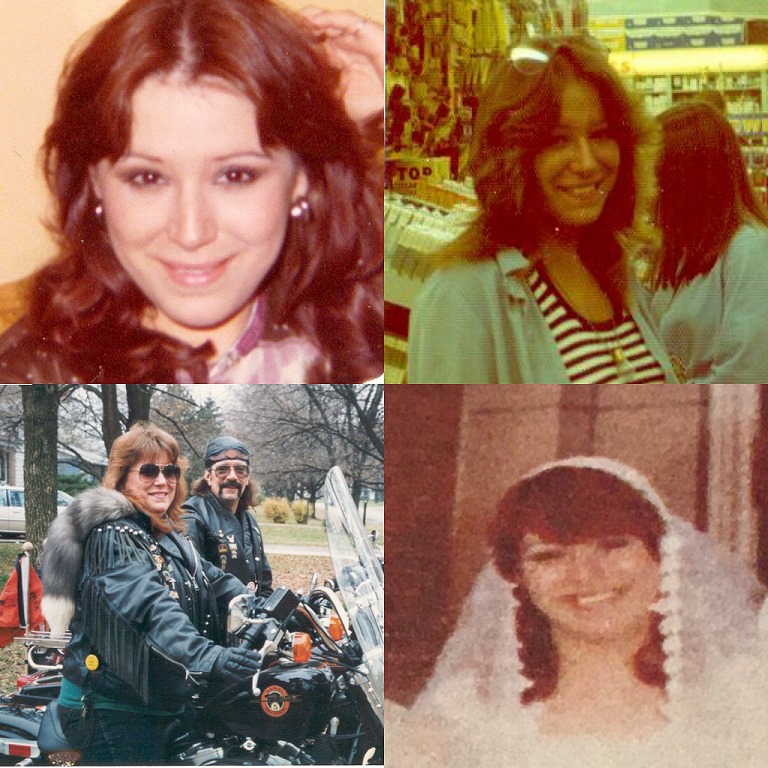
Thinking of my late sister today on her birthday. RIP. Heading to the woods to investigate what’s in bloom. She so loved spring! And she was fun loving and feisty. That’s me hiding behind her in the top right photo when we worked together back in the early 70s. Thanks for reading and have a good day!
PS It appears I have two blogs with similar names and “similar” but not the same URL’s:
I must determine which one has my archives, was paid for, etc.
Must choose or merge from:
https://lauraleewriterpoeteducator.com
OR
-
Of Crackers, Bitter Cold, and Grace While Teaching

(Found this writing from 8 years ago, teaching on the coldest day of my life. A new semester.)
“I felt a great pride and joy in teaching today, in super crazy conditions of cold, with kids so happy to see each other again after tense finals, with kids who thanked me for simple CRACKERS for gosh sakes, since it was bitterly cold–a record cold. I told them I cannot give them warmth, but I had crackers and as the calories churned, they’d feel better so could we stop complaining about the cold and pretend we are warmer with the carbs and move on and I knew they were too old to bribe them with simple crackers being nearly adults and all…but it worked.
I think that simple act of acknowledging their discomfort helped a lot. I also told them I love students more than trees, after a girl asked if there was anything I loved more than trees. Students, I said, I love my students more than trees, and you know how I fee about trees.
And the crying girl in the back of the room who talked to me after class, who sobbed and an and by the time I called her mom her mom had called me to thank me for calming her seventeen year old baby girl down and caring enough to take the time to make some calls on her behalf, even though it was so cold outside and thank you for the crackers gesture, the mom said. It meant something to her sad girl.
And this is why I teach. The connection with others, the hope for the future. Great kids. Goofy, smart, immature, mature, teens. Love them.
When I am not bashing my head into a wall screaming.
 “
“Thanks for reading.
Laura
Image from: https://en.wikipedia.org/wiki/Saltine_cracker
PS It appears I have two blogs with similar names and “similar” but not the same URL’s:
I must determine which one has my archives, was paid for, etc.
Must choose or merge from:
https://lauraleewriterpoeteducator.com
OR

Laura Lee
Literacy proponent

